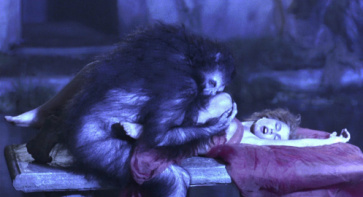
What are Monsters?: Why do we write them? Why do we love them?

Tuesday, January 28, 2020
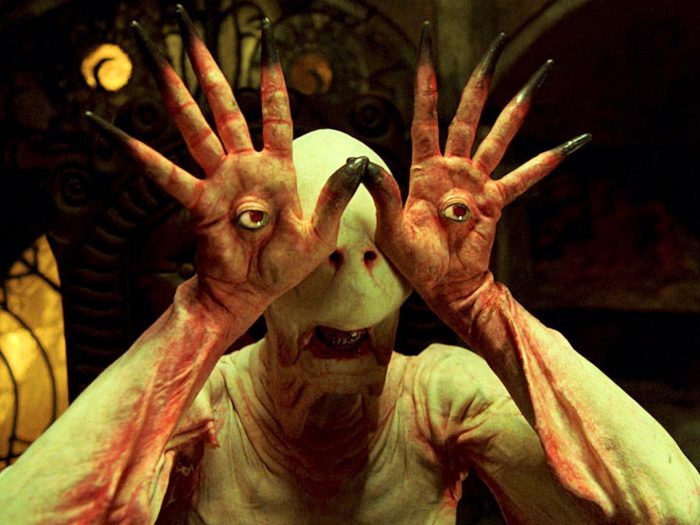
Alongside the essays about the use of “Latinx” (discussed in my previous blog), ENGL 3952 will be using Jeffrey Cohen’s “Monster Culture (Seven Theses)” and an excerpt from J. Jack Halberstam’s Skin Shows as theoretical frameworks for the course. Particularly useful as a connecting thread between both sets of essays is how ideas of “Latinx” and the monster are described as excessive, pointing to excess (embodiment and feeling), and hard to pin down. The monster, like Latinx, is unfamiliar, difficult, and makes a place for difference while recognizing that the difference cannot be fully described/encapsulated. For me, here lies the fascinating and enticing danger of Latinx and the monster: both hold a grip over a nation and culture that desires them (makes them into being), while attempting to relegate them to the margins, expunge them.

In our discussion today, I continued to remind students of the questions the essay raises: What does the monster do? What function does the monster have in culture? What effects does it create? And, what does it reveal about our own desires and fears?

The etymology of the word has reverberating effects on our daily usage. “Monster,” as Cohen explains is a warning, as can be seen in words like “demonstrate.” As we read throughout the semester, it’s crucial for us to keep these questions and the origin of the word in mind: if the monsters is a warning, if the monster is underscoring something to us, what are they pointing to, what are they warning us of?

In our discussion of Cohen’s essay, I rewrote the main theses for clearer understanding. However, these students had such an amazing grasp of the material, bringing in their own love for SF and monsters. I continue to be impressed and learn from these students, and the semester just started!

  1. The Monster is a Cultural Mirror: This thesis stipulates that monsters are a reflection of their culture and mirror to contemporary zeitgeists. The monster, therefore, is not just what it is (i.e.: a wolf-man), but it is also what it signifies, what is projects, represents, reflects. For example, Godzilla is more than the reptilian monster that terrorizes Tokyo, but also a reflection of the Japanese post-nuclear experience and fear of physical transformations (deformations, mutations) because of nuclear fallout.
  2. The Monster is a Temporal Mirror: This thesis is the most enticing to me, and the one students found the most intriguing and the one we focused on the most. Asserting that monster are elusive and shifty creatures, this thesis upholds that our creations are difficult to pin down and, therefore, must be examined within specific time periods. That is, the monster is always a reflection of its time; it always escapes the a static final embodiment. In other words, vampires (an example Cohen uses) are not static beings that always signify the same thing, but project different anxieties that reflect, for example, a culture’s shifting view of sexuality. Bram Stoker’s original nineteenth-century novel, Dracula, could be read as an indirect way to address deviant forms of sexuality. I showed students various images of vampires throughout popular culture in order to reflect this point:

The 1922 silent film presents vampires as a way of seeing homosexuality as plague-like: a form of self-loathing in the face of fascism.
Anne Rice’s vampires such as in Interview with the Vampire could be read as a celebration of different modes of sexuality and family structures.
Francis Ford Coppola’s film adaptation of Bram Stoker’s Dracula can be read as a medium for discussing the AIDS epidemic of the late-1980s and early 1990s.

A similar phenomenon can be seen by tracing different manifestation of Batman through the decades. For example, take the Batman from the 1966 television show and compare it to the depiction of the same superhero in the 1980s and 2010s. The campy and countercultural Batman of the 1960s (perhaps an escape from the gritty reality of the Vietnam War) is transformed in the 1990s to a reflection of post-Cold War anxieties and a focus on corporate America and its gritty/darker pitfalls. Lastly, Christopher Nolan’s 2012 The Dark Knight Rises reflects a humorless, bleak Batman and a film obsessed with the dangers of terrorism and the destruction of the nation:

3. The Monster as Challenger of Categories: The monster resists any easy categorization by mixing and mingling different categories that challenges the neat distinctions we make as a culture; challenging us to stretch and rethink our rigid understanding of categories (i.e.: the werewolf is an aberrant amalgamation of wolf and man, being both and neither). By refusing easy categorization, the monster demands us to question the labels and frames that we’ve used to make sense of the world. As such, the monster brings crisis to binaries: “the monster’s very existence if a rebuke to boundary and enclosure” (7).

4. The Monster as Justification/Excuse: Because of the freedom the monster presents, its ability to surpass boundaries and call question to fixed definitions, the monster manifest transgressions in cultural, racial, political, and sexual categories. We apply the label “monster” on those who we wish to exclude, those who wish to harm: To “monster” someone is to drape a veil of simplicity (X = evil) on that which we refuse to confront in all its complexity. Cohen touches upon the history of Native American genocide in the U.S. as an excuse for Western expansion, but this point can be extend to other populations as well (Jewish people in Europe, other indigenous populations in the American hemisphere).

5. The Monster as Border Patrol: The monster also serves as a warning against exploration and transgression. The monster “polices the borders of the possible” (13). As such, the monster culturally prevents mobility (intellectual, geographic, sexual) and acts as a border patrol to keep a society intact, stable, static, etc. Therefore, the monster is created as a bogeyman by conservative forces that wish to prevent change–the monster is a vehicle for normalization. For example, what is the moral of Jurassic Park or Frankenstein but “this is what happens when you play god with science!”?

The monster also acts as a lock on specific doors: do not go play in the woods alone because you know what happened to little Red Riding Hood; if you have sex a man wearing a hockey mask will kill you (or any variation of anti-sex morality of 1980s horror films); do not let women own property or they will become witches, etc.

6. The Monster as a Gateway Drug: The monster is, finally, an escapist fantasy. As a form of repulsion and desire/attraction, the monster acts cultural catharsis: a safe way to release some of our pent up rage and dissatisfaction without rocking the boat in any serious way. The monster is a cultural  safety valve; our repressions are channeled by culture into the monster (we “purge” ourselves) so we can go back to work on Monday morning as a nice, docile, compliant members of society. The monster can also be a form of “sublimation.” Instead of acting on our dark desires, we  we watch a football game, for example, and release our energies vicariously. The monster, therefore, becomes a form of drug, an “opium of the masses” that makes us “feel better” (i.e.: Carnival, Halloween, the monster as happy hour).

Finally, I showed the class a video from the opening episode of AMC’s The Walking Dead, which depicts ex-sherif Rick Grimes killing a child-zombie after awakening in the postapocalypse.

We discussed the following questions: Why do we like zombies? Why has film, literature, and television seen growing interest in the zombie? Do we find the killing of a child (zombie) satisfying, and if so, why? What “release” does the zombie provide? Onto who’s body are we projected when watching this scene?

The Walking Dead clip led to a fascinating discussion about Kristeva’s notion of “abjection” and our recognition and repulsion of figures of the corpse. We spoke about the ways the zombie exposes those things that should be neatly enclosed (jowls, intestines, brains, etc.) and how this produces a senses of fearful recognition and repugnance. Finally, we spoke about how the zombie enables viewers/readers to experience the joy of the forbidden, such as killing a child.

For Thursday’s class, I’ve asked students to consider how ideas of monstrosity allow us to see things usually unexamined within Latinx literature, as we begin our examination of Cristina Garcia’s Dreaming in Cuban (1992). Stay tuned!

What is Latinx?

Thursday, January 23, 2020

This week, our class began its examination of monsters and hauntings in Latinx literature by laying a foundation for U.S. Latinx literature and the use of the term itself. For this introductory week, I assigned three essays: Nicole M. Guidotti-Hernández’s “Affective Communities and Millennial Desires; Latinx, or Why My Computer Won’t Recognize Latina/o,” Nicole Trujillo-Pagán’s “Crossed out by LatinX: Gender Neutrality and Genderblind Sexism,” and Alan Pelaez Lopez, “The X In Latin Is A Wound, Not a Trend.”

Before we broke-down each of these authors arguments about the use of “Latinx,” I laid the foundation for Latinx literature and Latinx Studies in the U.S. The construction of the Latinx literary canon began in the debates within the university in the 1960s and 1970s that led to the institutionalization of Ethnic Studies and their subdivision into what we know now as African American studies, Asian American studies, and most recently Latino/a Studies. The incorporation of literature by and about people of color within the university classroom has seen a long struggle that could take an entire semester to unpack. However, for our purposes, I highlighted how the rise of Chicana feminism and books by Mexican American women such as Sandra Cisneros and Gloria Anzaldúa, Cuban American writers such as Cristina García, and Puerto Rican writers like Piri Thomas and the Nuyorican poets have paved the way for the contemporary writes that we will examine in the semester. Latinx literature, as I explained, is a field comprised of many ethno-national and racial groups (Mexican American, Cuban American, Puerto Rican, Central American, etc.) and, as such, the term “Latinx” is both capacious and limiting in its attempt to define such a homogenous group.

These three essays, I believe, provide students with a good overview of the various differing opinions with Latino/a/x Studies about the use of “Latinx.” As Guidotti-Hernandez explains, the use of “Latinx” emerges in millennial digital culture that demonstrates an ethics of caring and inclusion. This affective community is antiessentialist and shows the power of inclusion and diversity. Most convincing, for me, is how, while we should investigate how we arrived at the term, the excessive feeling within “Latinx” puts pressure on whiteness and Latino/a categories simultaneously, carrying the affective overload for that which is not fully recognized (149). Most importantly, for Guidotti-Hernandez, “Latinx” is productive for its community building capacities.

Trujillo-Pagán, on the other hand, explores how “LainX” undermines the struggles to understand gendered experience, obfuscates the role of patriarchy, is “ill-defined,” and masquerades as inclusion. In this essay, what I find the most convincing, is how Trujillo-Pagán questions if the simple changing of language can actually change behavior. Students in class, pushed against this question, however, asking if perhaps the simple act of thinking of the change in language leads to ultimate changes in behavior. They questioned if, as Trujillo-Pagán herself asked, changing language is a bandaid fix for larger systemic forms of oppression and violence.

In Pelaez’s essay, students found a middle-ground between Guidotti-Hernandez and Trujillo-Pagán: showing how the excessive possibilities GH finds in the “X” also always already marks the term as flawed and replete with violence (as TP stipulates). The “X” for Pelaez is, importantly, not for everyone, but exclusively for trans and queer communities. The X exposes violence, and the long history of settler colonialism, gendered violence, anti-blackness, and the nonsensical nature of living in a Latinx body.

Next week, ENGL 3952 will explore the use of representations of monsters in our culture through Jeffery Jerome Cohen’s “Monster Theory (Seven Theses)” and an excerpt from J. Jack Halberstam’s Skin Shows. I asked students to consider the following questions as they read: why do we turn to monsters? What do they help us explore about our historically specific moment? What do monsters allow us to see about ourselves that “realist” representations do not? Stay tuned!

Day 1: Introductions & Syllabus

Tuesday, January 21, 2020

The spring 2020 semester started today and our “Monsters, Hauntings, and the Nation” class had its introductory meeting. I asked students to tell each other a little about themselves: their major and year, why they were taking the course and what they were hoping to learn, and a book or film they enjoyed over the winter break. I was happy to see not only many English majors in the class, but also hearing a variety of texts students had engaged in their time away from UMass Lowell. Students spoke of books like Carmen Maria Machado’s new memoir, In the Dream House, and TV shows and movies like The Witcher, The Office, and Marriage Story. It was wonderful to see “genre” fiction and film spoken about in positive ways––a shift, I think, in the academy.

As varied as their reading and viewing practices were, students also expressed varied positions of comfort and knowledge when it came to the term “Latinx” and even horror and monster fiction. We spent a little time discussing the various uses of Latino/a, Latin@, and Latinx to lay a foundation for our readings this week, all which address the history of the term, its uses, and complications. Our class also touched on the connotations of the term “monster,” discussing the various potential uses and differences between monsters and hauntings such as ghosts, vampires, werewolves, and zombies. It is exciting to see many students eager to begin exploring the diverse and rich world of horror and Latinx literature, especially as they intersect.

I asked students, “What is a monster?” and students used fantastic language to describe their preconceptions of monsters, such as “terrify,” “fear,” “mysterious.” As we explored the syllabus, I explained how each text spoke to but, more importantly, expanded on common conceptions of monstrosity and haunting––asking them to read texts for the monsters and hauntings we cannot obviously see.

In preparation for our readings on Thursday, I spoke to the class about the importance of keeping the etymology of “monster” in mind as a basis for all our readings. From the Latin “monstrum”––a portent or unnatural event––monsters signify a warning, they point to contemporary anxieties and say “look at that!” As they read throughout the semester, I asked students to consider, What is the monster warning us about? Why is he warning us? What does he point to and why?

Finally, we reviewed in detail the “Monster Blogs” students will be curating this semester, and I’m excited to see what they come up with!

Welcome!

Wednesday, January 15, 2020

Welcome to ENGL 3952: Special Topics in Latinx Literature and Culture. This semester our topic is “Monsters, Hauntings, and the Nation.” This course introduces students to the varied and rich history of representations of horror, trauma, violence, and monstrosity in Latinx culture. The horror genre has conquered the contemporary literary and popular market. From Jason Voorhees and Freddie Kruger to Hannibal Lecter and Pennywise the Clown, the monstrous figures of horror stories terrify and titillate us. Yet, there is an important tradition of Latinx literary and cultural production that mobilizes the tropes of the genre in unexpected ways, compelling us to reimagine what horror can be as it intersects with race and ethnicity. 

This course examines Latinx horror to understand how the genre addresses the unique experience of Latinx people in the Americas. We will gain a deeper understanding of the capacities of horror to depict the foundational yet spectral presence of Latinx people in the “American” imaginary, treating monsters and haunting expansively. 

Attending to how writers use images of ghosts, zombies, monsters, and the otherworldly, we will explore shifting definitions of citizenship, nationhood, belonging, and identity. As we survey a variety of monstrous bodies, postapocalyptic landscapes, and dystopian fantasies, we will consider questions such as: What is a monster? What is “Latinx”? How does the unique experience of Latinx people in the “New World” haunt conceptions of nation, citizenship, “illegality,” and personhood? Why do Latinx authors and filmmakers turn to horror in order to depict the Latinx experience? 

I am particularly excited for this semester’s major assignment: the “Monster Blog.” In this space, students will be able to create and curate a digital archive and presence that focuses on their opinions and arguments about the course’s materials throughout the semester. As they write, students will form an argument about the questions that opened this course. And since students will be required to make their analysis of this semester’s texts public (via blogs), I will also be posting about our class activities, reflections on that day’s texts, and further reading recommendations. I will also provide links for my student’s blogs, readings, and assignments throughout the semester. For more detailed information about the course, please see the syllabus. I hope you’ll read along with us!

Design a site like this with WordPress.com
Get started