Our class had its last Zoom meeting this week. As most professors forced to switch to emergency teaching online, I’ve been thinking a lot about how to continue to produce meaningful connections between myself and my students, among students, and between students and the text. How will I continue to do this in Fall 2020 when we will most likely have to be online? How will I create an impactful course that challenges and encourages students to think with important concepts and texts? How will they think with each other outside of the classroom and in virtual spaces?
More than anything, COVID-19 has made me particularly aware of my privilege: I can work from home, I have access to food, I have access to friends and family and loved ones, even if we can’t be physically close. This semester, I was also made aware of how fortunate I was in getting to teach this particular group of students. I told them this as I was saying goodbye after our last class session: I have been constantly impressed with their dedication to the work of literary analysis. They come prepared with specific passages they want to explore together, push each other to think critically, listen to each other, and are reassuring in the most wonderful ways. Most importantly, they are always willing to take a risk and think about difficult questions and topics. They are intellectually curious and generous. I could not have asked for a better class to explore a topic and a series of texts I find so important. They made me a better teacher and I will miss them. Even during the pandemic, they were present and put in the work. I’m thankful they made this strange situation seem even slightly normal. Thank you!
I see a trend emerging in these past few blogs of mine. Apocalypse, isolation, confusion. How could I have known that I would be teaching stories of the world’s end as the pandemic was forcing us to stay home and obsessively watch the news as things seem to be collapsing around us. First it was No Country for Old Men with its attempt to understand the chaotic force that was approaching, then it was Her Body and Other Parties (especially “Inventory”) with its apocalyptic pandemic spread through human contact––but no one wants to stay apart––and next week is Junot Díaz’s “Monstro.” Although we’ve read Díaz in this class before, I assigned “Monstro” because it deals overtly with monsters and incorporates an under-considered area in Latinx literature, Haiti.
Our class for the semester is next week. I know my students are looking forward to this break. I know I am. I will miss this group of students. I have been so impressed with their commitment to literary analysis and their investment in each other. But transitioning to online teaching during a pandemic has been exhausting. Revisiting Junot Díaz’s “Monstro” in preparation for our class next week has been really interesting. It’s uncanny how many similarities the unknown disease in “Monstro” has to COVID-19: unknown origin, unknown transmission power, the desire for those infected to be close to others who have “La Negrura” as well. Of course, the story carries larger racial and class implications, inflected with the long history of discrimination and violence between the Dominican Republic and Haiti. Yet, as we’ve seen in the past few weeks, black and brown people are getting infected and dying at much higher rates than other populations––an issue that brings up questions of race, class, and expendability.
Like many of the texts we’ve read this semester, “Monstro” is a story I have taught many times and one that I write about for my own scholarship as well. I’ve been sitting with this text for many years now, and as I prepare for this class I really am trying to put my own analysis of the text on the back burner. I’m really interested in those things the students will bring out of the story and hear what they think. So, I’ll present a brief summary of a forthcoming chapter on the story that I’ve been working on:
As with The Brief Wondrous Life of Oscar Wao, we can see how in “Monstro” Díaz continues to demonstrate a deep investment in the otherworldly, excessive, and speculative, as they intersect with histories of violence in the Antilles. In “Monstro,” Díaz turns to the overtly speculative, presenting us with a mysterious infection that begins in Haiti and causes a zombie apocalypse. The story centers on a nameless narrator who returns to the Dominican Republic during summer break from Brown University to visit his mother, who is suffering from cancer, and tells of activities alongside a wealthy acquaintance from Brown, Alex, as the infection slowly takes over in Haiti. Through strange twists and turns, the story also tells how the “viktims” of the infection transform from docile infected bodies to what the story terms “Class 2” monsters, a new formulation of the popular zombie. The narrator details how the infected are quarantined and studied—yet never deciphered—finally demonstrating the danger they present, which makes the “Great Powers” (the story’s reimagination of Western governments) bomb the island. This, however, does not stop the zombie apocalypse.
The disease, named in the Dominican Republic, “La Negrura,” for its capacity to re-blacken already black skin, carries apocalyptic consequences for the narrative, as the infected are quickly turned into proto-zombies at first and are fully “zombified” by the end of the narrative. The infected in “Monstro,” I argue, expands Díaz’s well-known concept of fukú americanus, which opens Oscar Wao. My reading of fukú is contingent on the narrative practices in Díaz’s oeuvre and his world-making project. This world-building constructs the Caribbean as a postapocalyptic space created through anathema that reproduces colonial violence on the body of the Afro-Caribbean subject. As a concept, fukú is an all-encompassing force that is both the Curse and a tool used by those byproducts of fukú itself, such as Rafael Trujillo and Christopher Columbus. In “Monstro,” Díaz continues the depiction of the Caribbean as a postapocalyptic space and Afro-Latinxs as science fictional embodiments. “Monstro” presents the Caribbean (and the Americas) as instantiated into modernity by this curse of the New World (fukú), which remains into the present as a haunting presence. I examine how fukúreverberates through the short story’s plot, narrating the Caribbean as a space created through a cataclysmic rift that emits dead bodies. The infected demonstrate affective ties to the land and each other that raise larger questions about memory and the forces that emanate from history through their bodies. Through the infected, Díaz exhumes the histories of colonialism, slavery, embodied labor, and racial expendability: histories that demonstrate an inescapable pattern of violence within the Caribbean. The mass groupings and screams of the infected become a form of racial protest against the histories that created them as dead subjects. Finally, I examine how the “zombie” horde is an effect of the short story itself, in which the particular zombification Díaz narrates points readers to the origins of the zombie in Haiti and the anxiety of racial infection that can turn all island dwellers (and the rest of the Americas) “black” through the disease.
I’m so looking forward to hear what my students think of the viktims, their coral reefed formations, and their desire for proximity. Stay tuned for a summary of my students final reflection papers; I’m sure they will be brilliant, like all their work this semester!
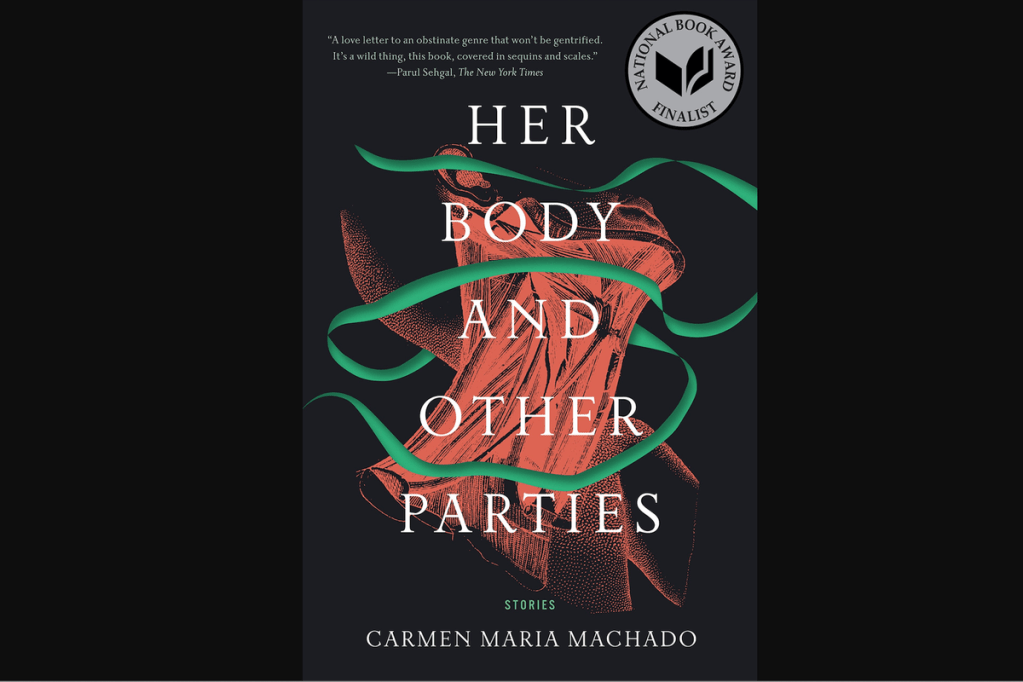
Next week, our class will start discussing Carmen Maria Machado’s short story collection, Her Body and Other Parties. This is a book that I’m deeply invested in, not only because of its beautiful writing but because it’s one I’m incorporating into my own work. I’ve been thinking with this book for some time, but returning to this book now has been particularly special. Since the outbreak of the pandemic, I’ve been thinking a lot about Machado’s short story, “Inventory,” in which a woman navigates her way through the U.S. to end-up on an island off the coast of Maine, alone. She is escaping a pandemic herself, one that, importantly, is transmitted through human contact. Meeting an ex-CDC employee, she is told that “the fucking thing is only passed through physical contact […] If people would just stay apart––” How apropos for 2020!
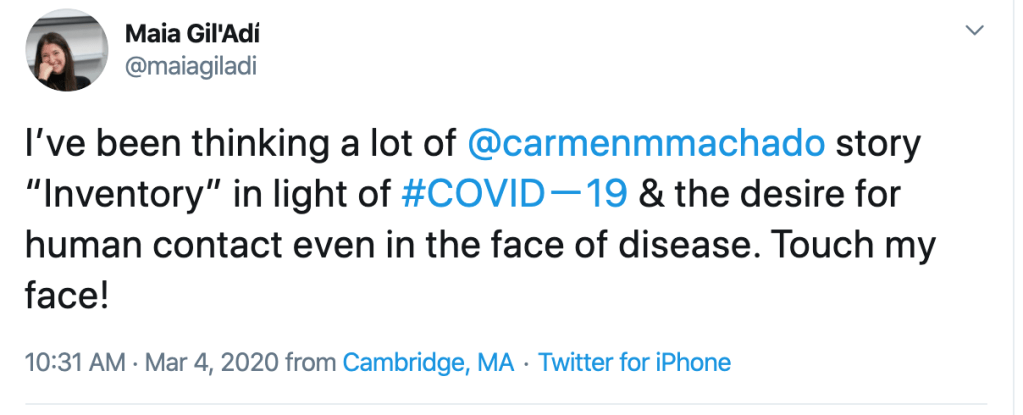
As I wrote in this tweet, and as the narrator of “Inventory” understands, the desire for human contact is so profound that it cannot be avoided. We put ourselves in danger, we betray ourselves (?) in order to feel another body close to ours. In the most difficult moments, touch, comfort, care is what we need most. But, what happens when, like our narrator, we are alone? This is the most horrific possibility the story itself presents.
I assigned this collection for our Latinx monsters class because of the innovative ways Machado implements the tropes of speculative fiction and horror in order to represent women, and in particular their bodies. Right before Boston implemented its “shelter in place” order, I also participated in a roundtable at NeMLA 2020 that centered on Machado and her work. The primary concern of the roundtable was examining her work as a turn in Latinx literary studies. Our roundtable considered the Latinxness of her text, where no overt markers of race or ethnicity are evident, and I’m interested in asking my students whether they considered Her Body andOther Parties a Latinx book and why.
As I stated in my NeMLA paper, Latinx scholars have demonstrated an affective attachment in reading Machado as a Latinx author, although her work evinces no overt signs of race and ethnicity (either Latinx or white). While she is technically a Latinx author, Her Body and Other Parties makes no reference to race or ethnicity. Resorting to lyrical “high art” literary language––MFA pedigree and training is evident here––the text allows all characters to “pass” (of course, this is a larger claim about our reading practices which see all characters not clearly identified racially or ethnically as “white”). Imaging Machado’s work as Latinx positions latinidad as a speculative endeavor that is outside the reach of language—unsayable and unknowable.
My paper focused on a comparative analysis of Machado alongside Han Kang’s novel, The Vegetarian. This examination of the speculative female body unearths unexpected yet interrelated narrative strategies, literary patterns, and networks; networks that are particularly significant in our contemporary moment in which difficult conversations of sexual abuse and its intersection with race, ethnicity, financial, and institutional power have dominated our zeitgeist.
The central questions that organize this work are: How do I consider my body? Where do I find its beauty? Where do I find its pleasure? How does the world demand I consider it and how do I make space for it within the world? I have been thinking a lot about a couple lines from a Muriel Rukeyser poem, “Käthe Kollowitz,”: “What would happen if one woman told the truth about/ her life?/ The world would split open.” Indeed, representations of the female body, sexuality, and desire in Machado and Kang rip apart not only the world, but the body, and the text itself. In centralizing the experiences and desires of women in their texts, Machado and Kang obliterate expectations of fiction—for linearity, wholeness, and resolution—while also inflicting pain on the self. The high literary style of both writers also associates this violence and self-abnegation to notions of aesthetic pleasure and artistic merit.
Machado’s short story collection is, as the title suggests, deeply concerned with female embodiment—its shape and size. It is also interested in food and eating, especially as it affects the female body. Kang’s novel, as its title suggests, is also concerned with eating, or, more precisely with its inverse, abstention—denial and rejection of the human body. Food, eating, the body: what should be sources of pleasure are instead ones of discomfort, pain, denial. Forbidding yourself of food so the scale reads 105 instead of 106, watching your hip bones jaggedly display themselves, a source of pride in their accomplishment. Delight in seeing how far you can push your body, delight in its pain. How far can I go? How small can I make myself? Seeing the least amount of space you can take—do I want to become invisible? How much pain can it endure? It, not I—a separation of body from self. How much pleasure can I achieve from its pain? Or, the pleasure in overindulgence, seeing how much you can take in, put away. How much can my flesh expand? How many layers can it take? How much space can my body demand?
In my work, I consider how both texts foreground the female body as a speculative arena through which self-abnegation and refusal are explored in relation to eating, hunger, and desire. The body acts as the space through which colonial and racial violences are explored and through which women enact their resistance and defiance against systemic patriarchal domination. However, resistance takes place not, as expected, through typical acts of dissent, but through forms of refusal and self-abnegation that hurts the self.
The women of Her Body and Other Parties enact a shadow feminism that manifests itself through forms of self-destruction, masochism, and a refusal of the typical bonds that would define us as women. In many ways, these women refuse to reproduce their relationship to patriarchal forms of power, yet in so doing hurt themselves, and at times, self-destruct. In a world that continually performs violence on the body of the female subject, why not refuse to eat meat and then food altogether? Why not become plant? Why not assume control over your own destruction? Why not become dress-ghost? Why not untie your ribbon and let your head drop to your husband’s feet? In Her Body and Other Parties we see a version of woman that is messy, porous, violent, self-loathing; one who refuses to remake and rebuild. The women of Machado’s narratives “seeks instead to be out of time altogether, a body suspended in time, place, and desire” (Halberstam 145).
Machado’s short story collection is concerned with many female-centered subjects: queer love, queer sex, sexual and gendered violence, the reimagination of fairy tales, motherhood and procreation. It is also deeply concerned with corporeality, female embodiment, eating, and fatness. Throughout eight short stories Machado lyrically tells various narratives that center women and their desires, the violence they endure and survive, and the systemic forms of cruelty and oppression women are always subject to—all in speculative and fantastical modes. The stories I will focus on here are also particularly interested in the female body, its weight, visibility, and undoing. “The Husband Stitch,” for example, reimagines the classic fairy tale, “The Green Ribbon,” which tells of a young girl with a green ribbon around her neck who refuses to tell her boyfriend-then-husband why she wears it. In their old-age, however, she allows her husband to untie the ribbon, causing her head to fall off. Machado’s reimagination centralizes male psycho-sexual desire and power over women and the passing-on of this power generationally. Ultimately, the text asks us to consider who has the power to undo and unbecome. The title of the story, it should be noted, is a reference to a purported surgical procedure in which one or more sutures than necessary are used to repair a woman’s perineum after it has been torn or cut during childbirth.
From the outset, the narrator of “The Husband Stitch” is interested in the choices she makes and the power to decide: “I have always wanted to choose my moment, and this is the moment I choose” (Machado 4)—selecting a young man at a party to at first have sex with, then date, and ultimately marry. The story, in this way, upends conventional notions of male-female power dynamics, opening with the narrator stating: “In the beginning, I know I want him before he does. This isn’t how things are done, but this is how I am going to do them” (3). “In the beginning” marks not only the beginning of the story, but the creation of the world, putting god-like power in the narrator’s hands. Her boyfriend-husband is incensed with her refusal to disclose the reason for her ribbon; unable to accept that a woman has information she makes inaccessible to him. Her husband’s curiosity and anger at her ribbon is mirrored in their son, who at first playfully touches her throat and then more hungrily demands for its discovery. Both man and boy are demanding of access to all forms of knowledge and enraged at the narrator’s prohibition to her secret. It is important to note that her secret is intimately linked to her body, its unity, and stability, which ultimately are undone.
In their old age, just as in the original fairy tale, the narrator resigns herself to her husband’s desires: “‘Then,’ I say, ‘do what you want’” (30). Untying her ribbon, the narrator’s “lopped head tips backward” and rolls off the bed, making her “feel as lonely as [she has] ever been” (31). The decision to unmake herself, literally unstitching her own head to appease her husband, is intimately linked to her affective position—she is separated not only from herself but husband, son, and community. We should ask ourselves were agency lies within the story and if the narrator’s permission is a consensual one or done from her own volition. I would like to propose that while the narrator is pushed by the male insistence and demands of her husband, it is crucial that the ribbon is only untied after she verbally allows him to do so; realizing there will never be a space or time in which she will not be demanded upon to account for her knowledge, the narrator chooses to undo herself.
Much as the ribbon causes confusion and anger because of the unanswerable questions it raises. Women’s bodies themselves become sources of mystery and fear in “Real Women Have Bodies.” Working at a dress shop, Glam, the story’s narrator discovers that she has been selling dresses inhabited by disembodied women, sewn into the material where they occupy the space in dress form: “She presses herself into it, and there is no resistance, only a sense of an ice cube melting in the summer air. The needle—trailed by thread of guileless gold—winks as Petra’s mother plunges it through the girl’s skin. The fabric takes the needle too” (134). The imagery of the needle and thread combines, as with “The Husband Stitch,” suggestions of bondage and domesticity, themselves associated with notions of sexuality and womanhood (of course, bondage can refer to a woman’s containment within social norms but also the sexual practice of bondage).
Yet it is the mystery of the women’s disappearance that lends the female body so much power in the narrative. Slowly fading away, the cause for the disappearance of hundreds of women is never explained, leading people to imbue them with unearthly power and danger: “It turns out that they think that the faded women are doing this sort of—I don’t know, I guess you’d call it terrorism? They’re getting themselves into electrical systems and fucking up servers and ATMs and voting machines. Protesting,” Petra explains to the narrator (144). Yet the fear that they instill come not from overtly aggressive or violent acts, but through silence and passivity, the unmaking of themselves as corporeal beings. The narrator describes the women in the dress-making room as “glowing faintly, like afterthoughts” (134) and their expression as indecipherable: “The faded woman won’t look away. She smiles. Or maybe she is grimacing” (145). She importantly also understands that all women are destined to disappear: “Soon, I’ll be nothing more, too. None of us will make it to the end” (147). The narrator implicates not only herself but all women in this disappearance, positioning the world as an inhabitable space for them as-is. However, as she has seen, women take on a new form of passive resistance which they refuse to escape.
I’d like to conclude by thinking of the story “Eight Bites,” in which a woman undergoes gastric band surgery in order to lose weight. Her sisters have undergone this surgery—implicating fatness as well as the desire for thinness and surgery as part of family tradition (kinship formations?). Unlike her sisters, however, the protagonist’s surgery does not have the same desired effects. In fact, the surgery not only causes a rift between her and her daughter, but unlike the “ghosts” that haunt her sister’s, the supernatural entity that haunts her house after the surgery is one that causes a form of externalized deep anger toward the self.
Not only does “Eight Bites” touch upon the toxic message women have internalized about body image, but also about the pleasures of self-harm and abnegation. The narrator’s self-inflicted violence finds its most poignant expression through the supernatural being that haunts her post-surgery: her fat-ghost; the fat she has attempted to get rid of but that now resides in her house. Before the surgery, the narrator desires the possibility to “relinquish control[,]” making everything “right again” (158); a desire to be unthinking and perhaps uncritical of her own body, much like the oyster she eats before surgery: “I was jealous of the oysters. They never had to think about themselves” (157). Much like Yeong-hye, the narrator of “Eight Bites” wishes for an undoing of the self, a state of mollusk-like (plant-like) mindlessness.
However, the fat-ghost disallows this and acts as a continual reminder of her decision inspired by self-hatred. Much like the oyster, her fat-ghost “is a body with nothing it needs” (165) and inspires deep, instinctual anger in the narrator: “I do not know that I am kicking her until I am kicking her. She has nothing and I feel nothing except she seems to solidify before my foot meets her, and so every kick is more satisfying than the last” (165). The act of kicking not only makes the ghost robust and entity-like, but also provides pleasure for our narrator. Here, she is exerting violence on an externalized formation of the self that she has originally rejected through the surgery but that has remained as a haunting presence. In fact, the story provides no possibility for comfort: realizing she was wrong in her decision, the narrator imagines the time of her death when she will ask forgiveness of the fat-ghost. Importantly, the haunting acts as an eternal manifestation of self-hatred created by the narrator herself: “She will outlive me by a hundred million years; more, even. She will outlive my daughter, and my daughter’s daughter, and the earth will teem with her and her kind, their inscrutable forms and unknowable destinies” (167). As with all the women of Her Body and Other Parties, female presence here enacts a form of mystery that can never be answered.
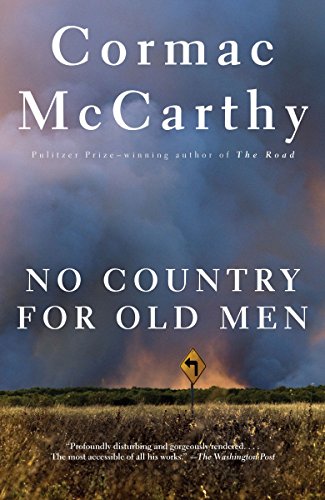
It’s strange to be reading and teaching a book like McCarthy’s No Country for Old Men in the time of the COVID-19 pandemic. Last week I wrote about the uncertainty and doubt that permeates the text, and particularly through Sheriff Bell’s discomfort at what seems to be a world quickly unraveling into chaos. Of course, Bell’s views are deeply entrenched in an antiquated notion of who belong to the nation; what the nation itself entails; changing demographics and societal norms he clearly has not adapted to nor understands.
The novel’s title is taken from William Yates’s poem, “Sailing to Byzantium,” and demonstrates the desire to escape a space that seems to be a world devoid of meaning and beauty––a chaotic, confusing, devolving world. My students incisively pointed out how the novel presents morality as an ambiguous force; something Bell does not want to understand. I found it interesting that on this reading, however, I was agreeing with Chigurh’s view of history, his implementation of justice. Much as the $2 million that instigates the novel’s plot––a narrative tool–-the coins Chigurh uses throughout to determine who lives or dies, act as tools of justice. Interestingly, while he uses these tools of chance (fate), his view of consequences and history are wholistic and staunchly predetermined. Before killing Carla Jean, Chigurh explains that while she was not directly involved in the stealing and hiding of the money, her choices and her husband’s have consequences:
Every moment in your life is a turning and every one a choosing. Somewhere you made a choice. All followed to this. The accounting is scrupulous. The shape is drawn. No line can be erased. I had no belief in your ability to move a coin to your bidding. How could you? A person’s path through the world seldom changes and even more seldom will change abruptly. And the shape of your path was visible from the beginning. (259)
Next week, our class will discuss the Coen Brother’s adaptation of McCarthy’s novel. I asked my students to consider the artistic choices this film makes, not only in terms of directorial ones, but acting ones as well. I’m particularly interested to hear how my students will react to those scenes that are omitted from the film, ones that I think are crucial for the text, in particular Llewelyn Moss’s conversation with the hitchhiker. Here, he presents a similar view of history and the consequences of choice that Chigurh does:
It’s not about knowing where you are. It’s about thinking you got there without taking anything with you. Your notions about startin over. Or anybody’s. You dont start over […] Ever step you take is forever. You can’t make it go away […] You think when you wake up in the mornin yesterday dont count. But yesterday is all that does count. What else is there? (227)
Like Chigurh, Moss understands the importance and severity of choice. Unlike Chigurh, Bell is determined in believing that he can implement change and be a force of good. As my students noted, perhaps Bell is beginning to comprehend this at the novel’s conclusion. Here, Bell reminisces not only about his patriotism, involvement in WWII, and his work in law enforcement, but also presents a larger network of violence that extends to his family’s colonial legacy through the Vietnam War. While he understands the importance of choice and action, until the end of the novel when he retires, Bell believes he can be a tool for good (much like the coin is a tool of death). Yet, as Chigurh poetically explains, one cannot put themselves outside of history: “I’m not sure why I did this but I think I wanted to see if I could extricate myself by an act of will. Because I believe that one can. That such a thing is possible. But it was a foolish thing to do. A vain thing to do. Do you understand?” (175). It seems that the only way that Bell can extricate himself is through making himself inconsequential.
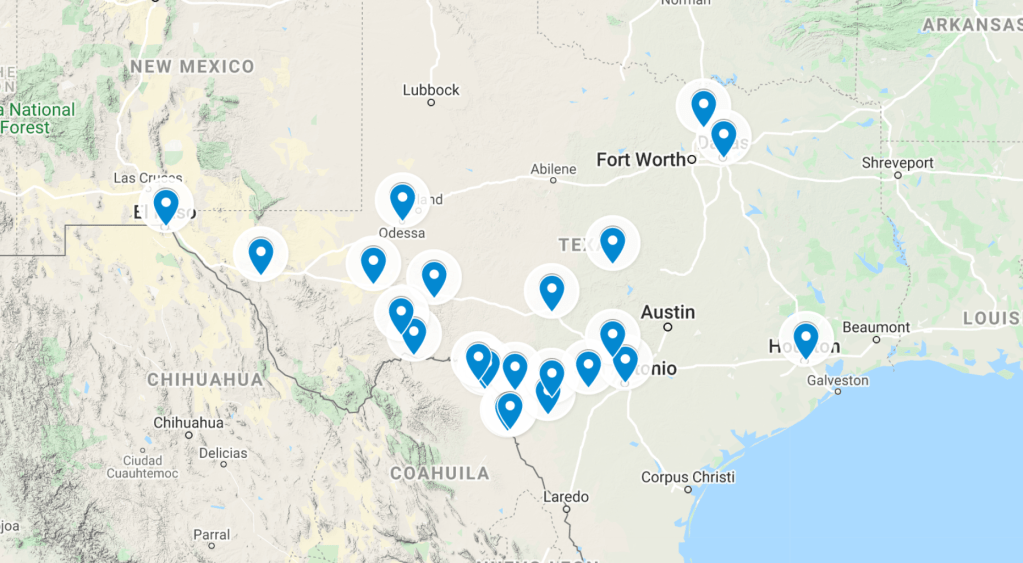
Finally, and on a totally different note, I was intrigued at the spaces this novel investigates. No Country is deeply rooted in Texas, spending most of its time in West Texas and those cities close to the border. I was interested in tracking the main character’s movement in the novel––in another iteration of this project, I would track each character individually and see in what places they intersect. Here is a map that details the places in Texas and Mexico Bell, Moss, Chigurh, and Carla Jean Moss go to throughout the novel.
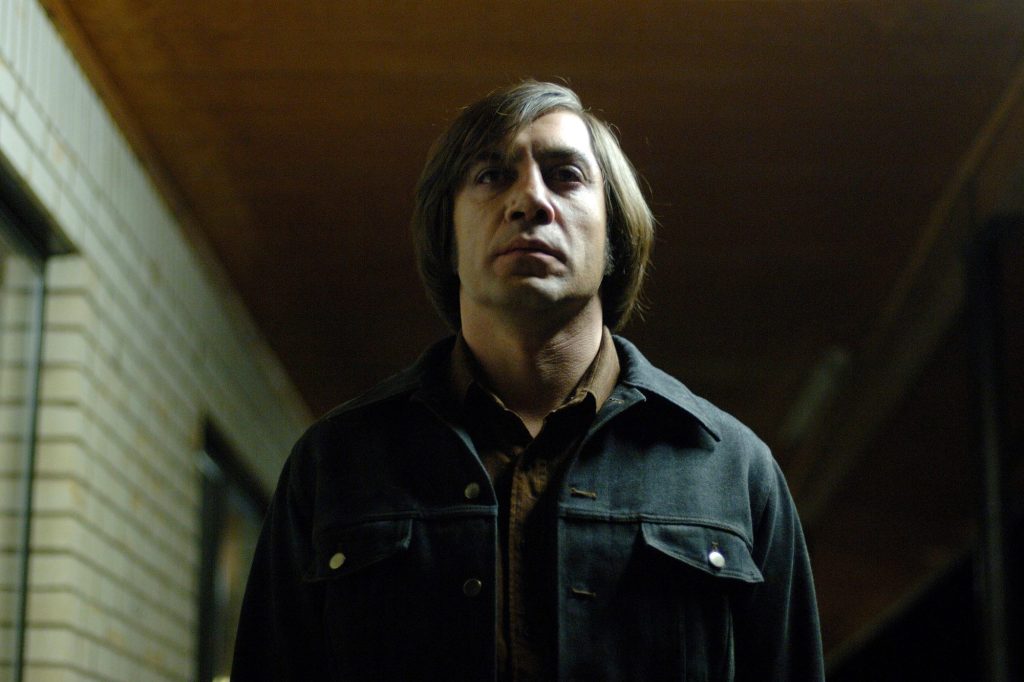
On a final final note: I can’t wait to hear what my students have to say about the choice of not only casting Javier Barden as Anton Chigurh, but also about his presentation. To me, there’s something fantastically queer about his presentation––the adoption of the pageboy haircut which feminizes him, while also making him that much more horrific, alien, Other.
This week “Monsters, Hauntings, and the Nation” will begin meeting online. I have been worrying about what these meetings will look and feel like, and having to come to terms that we cannot return to the ways before the pandemic (a strange phrase to write!). This group of students has been the best I’ve had in my time as a professor. This is not a nostalgic statement, but one I have been feeling all semester, and I’ll miss our in-person dynamic, rapport, and in-depth analysis of the text. I am hoping that at least this last thing we will be able to keep: a curiosity of the text and desire to investigate it with each other. If I know these students, I’m sure we will do our best under the circumstances.
Perhaps it is because of the pandemic, but something has struck in re-reading Cormac McCarthy’s No Country for Old Men: uncertainty and doubt in the face of an unknown force and changing times. Since the pandemic started, things have felt particularly stressful and out-of-control, so maybe this is why I find myself feeling aligned with Sheriff Bell. To me this is shocking, of course, seeing as the text does a clear job of illustrating the xenophobia, conservatism, and racism of the sheriff and his representation of the borderlands and its people. It is unclear to me still if the text is writing against itself and revealing these racist tendencies, or attempting to write against them. Perhaps the text reveals the reader’s own views, alaAll in the Family and the controversy over Archy Bunker’s character.
Even in writing this post, I’m struck by my own wishy-washy tone: too many “perhaps” and “maybes” here. Yet, if as I tell my students that a novel teaches you how to read it from its opening, uncertainty and fear is what structures No Country. The novel opens with Bell’s meditation on “what was coming down the pike” (4); a meditation riddled with “I don’t know what to make of that” and “I surely don’t” (3)––variations of this can be found throughout (62; 63; 71; 79; 95; 158). Through the remainder of the novel the sheriff continues to represent the border as suffering under a new form of violence; “somethin we really aint never seen before [sic]” (46). Of course, this new something is not only Anton Chigurh (the psychopathic killer in the novel) but also the wave of violence caused by the drug trade. This is problematically represented as being a Mexican occupation and Mexicans in the novel occupy a space of evil.
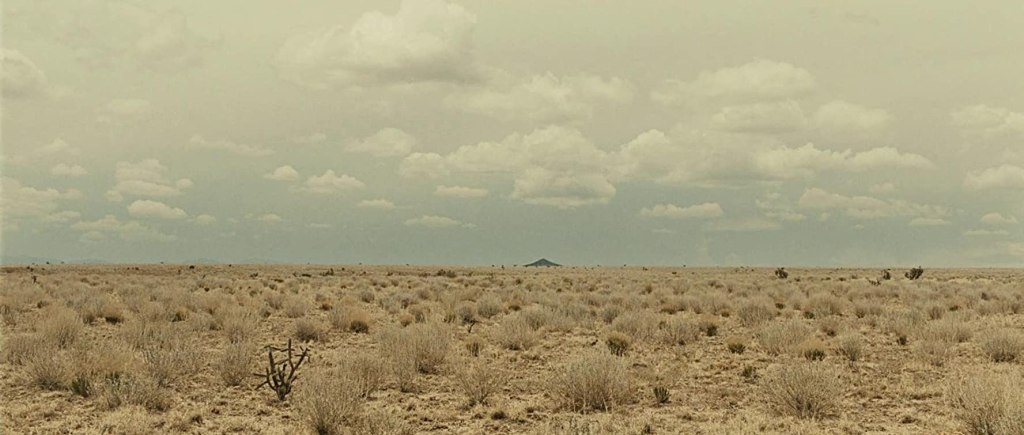
Not only is the sheriff burdened with the stress of the unknown, but LlewelynMoss also is faced with terrifying unknowable forces. Finding the $2 million that instigates Chigurh’s hunt for him and his family, Moss “absolutely knew what was in the case and he was scared in a way that he didnt [sic] even understand” (17). This in part has to do with Chigurh himself, who is depicted as an unstoppable force of evil; perhaps something that has emerged from the U.S.-Mexico border itself––the force the sheriff has been fearing since the outset of the novel. This is also due to the landscape itself, which throughout No Country is represented as a space of darkness, violence, and doom.
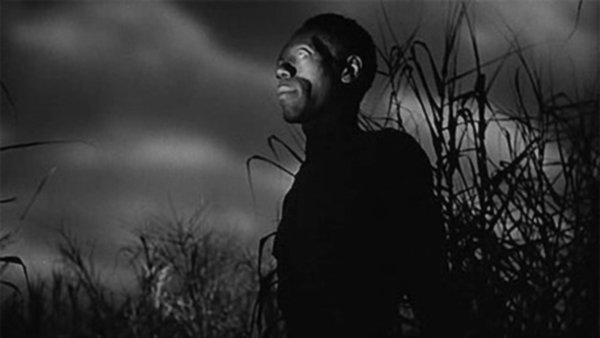
My students have read the majority of the text for tomorrow (we’re concluding our discussion of the novel next week and discussing the Coen brother’s film adaptation the following). I’m most curious in our discussion tomorrow if they see Chigurh as a Mexican subject, as the film clearly portrays him to be (or at least “foreign” or “Latinx”). The only description of him comes late in the novel and is incredibly ambiguous: “The man turned his head and gazed at Moss. Blue eyes. Serene. Dark hair. Something about him faintly exotic. Beyond Moss’s experience” (112). Is Chigurh’s exoticism something that marks him as Latinx? Is his exoticism that reaches beyond Moss’s experience make him something not Latinx, since Moss is Texan and clearly has come into contact with many Latinx peoples?
Stay tuned for more as we discuss No Country and its film adaptation. I’m really looking forward to hearing what my students think tomorrow!
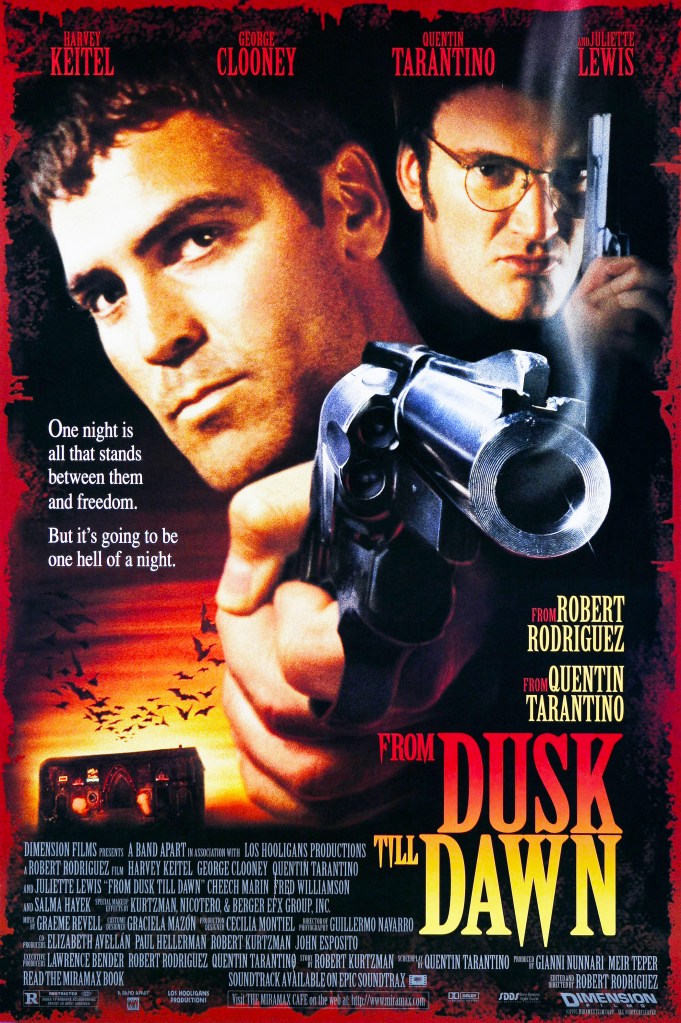
Last week our course transitioned from the Dominican and Dominican American spaces of Junot Díaz’s The Brief Wondrous Life of Oscar Wao to the U.S.-Mexico border. Our first text in this area was Robert Rodriguez’s 1996 film, From Dusk Till Dawn (after spring break we will begin our discussion of Cormac McCarthy’s No Country for Old Men. It makes me incredibly sad that our conversation about this incredible—both in terms of style and problematic depictions—will have to be online because of the COVID-19 outbreak but stay tuned for updates about our online discussions).
Only one student in the course had seen the film, and it was particularly interesting putting not only the B-list and cult classic actors in context for them, but also contextualizing the importance of the mid-1990s for this geopolitical space, especially as it relates to NAFTA and the war on drugs.
The film has various turns or shifts in tone that I find particularly interesting. The first is the shift from the serious drama (Quentin Tarantino tone, I would call it) convenience store robbery/blow-up to the family (now with the Seth and Richie Gecko in tow, played by George Clooney and Quentin Tarantino, respectively) entering Mexico and approaching the Titty Twister. The third turn takes place when the dancers of the Twister transform into vampires, extending the over-the-topness we see as the motorhome approaches the bar even further; taking the excessiveness of camp aesthetics and turning it “up to eleven.” I asked my students to consider how the motorhome could be consider a reconstituted haunted house, equipped with its own monster (Richie: depraved sociopath) as it approaches another haunted space and monster (the bar and its vampires).
Our class on From Dusk Till Dawn spent a great deal of time discussing how the film defines criminality and monstrousness in strange and unconventional ways, staging a “good” criminal (Seth Gecko) who must rid himself of the “bad” criminal (Richie Gecko). In fact, the argument many made was that as a more ethical representation of “badness,” Seth is allowed to survive in conjunction with the virginal Kate (Juliette Lewis). Richie’s childlike voice and demeanor hides something more sinister underneath: an instinctual sadism and desire for violence and blood akin to the vampire itself. The movie, my students argued, therefore must rid itself of Richie, much like it must destroy the vampire.
Interestingly, Richie’s murder of the bank teller (before entering Mexico) is only shown in brief cuts that move back and forth between the victim’s body and Seth’s face as he encounters it. The violence performed on her body is never shown and neither is the aftermath of this violence (we only see her body in the distance and blurred at that). This is in stark opposition to the violence performed on the Mexican woman’s body (woman-cum-vampire). In fact, Cheech Marin’s (Chet Pussy) speech as the motorhome approaches the Titty Twister promises gendered violence that is paradoxically always linked with pleasure and excessive camp aesthetics:
This “slashing pussy in half” is, indeed, what takes place through the remainder of the film. As a class we discussed how Satanico Pandemonio (Selma Hayek) introduces a sexuality that is ancient and powerful, as she dances with a large boa (what more phallic than that?) around her neck. Her threat to Seth is one that promises female domination and control over a male Anglo-American body; one that the film cannot endorse:
“I’m not gonna drain you completely. You’re gonna turn for me. You’ll be my slave. You’ll live for me. You’ll eat bugs because I order it. Why? Because I don’t think you’re worthy of human blood. You’ll feed on the blood of stray dogs. You’ll be my foot stool. And at my command, you’ll lick the dog shit from my boot heel. Since you’ll be my dog, your new name will be ‘Spot.’ Welcome to slavery.”
Looming over him, the achievement of Satanico Pandemonio’s threat is impossible to imagine, both because she is vampire and woman. As many of my students pointed out––particularly my female students––From Dusk Till Dawn is highly problematic and seems terribly outdated. As we can see from the scene above, the only spaces women can inhabit is that of exposed breasts or slashed pussies (following the film’s own terminology). The only “woman” (if we can call her that) it can imagine surviving is Kate, the cross-bearing virginal daughter. Following horror film conventions, she is the final girl who emerges covered in the blood of monsters (alongside that of her family).
For all of its fabulous campiness and in spite of its outmoded gender politics (it seems that Tarantino still needs to get up-to-date somewhat), I find the final scene particularly promising. As Seth and then Kate drive away from the Titty Twister, the camera pans upward into an areal shot of the landscape, revealing an ancient temple underneath the bar with what seems to be hundreds of eighteen-wheelers: a truck cemetery.
Perhaps the temple signals a longer history of resistance on the U.S.-Mexico border, that while depicted through problematic representations of female sexuality (which apparently must be destroyed), also formulates an anti-capitalist blockade that will continue. Admittedly my students were not fully committed to this reading, arguing that I was giving the movie too much credit and asking how such a brief inclusion could carry so much weight for the film. As always, students in “Monsters, Hauntings, and the Nation” continue to push my thinking and teaching, and I’m going to miss seeing them in-person. Hopefully we can all return to campus soon!
It’s difficult to teach books you love. It’s difficult to teach books you have not only read multiple times but also write about and have (in my opinion) well developed, strong, and original arguments about. I have to admit that I used to love The Brief Wondrous Life of Oscar Was (2007). I found myself seduced by the writing, the narration, the scope and ambition of its project. While I wouldn’t say I love the book anymore, I am still deeply invested in it. The first chapter of my book project is dedicated to Oscar Wao (alongside other works by Díaz). Yet, it’s difficult to contend with the novel, and Díaz himself, in light of the various sexual assault and misconduct allegations against him in April and May 2018.
Although I don’t feel the same as I once did about Oscar Wao, I find it to be an important work not only of Latinx fiction, but one that centralizes the speculative and monstrosity––a crucial element for our course this semester, and my work generally. I’m also someone who continues to think about this novel and Díaz’s position within the Latinx and American literary canon. So, I was nervous about teaching this text in ”Monsters, Hauntings, and the Nation” this semester. Partly, it is a complicated text that needs a great deal of parsing, but also I was concerned with the statement teaching this novel would have: what does it mean asking students to buy this novel in light of the #MeToo allegations against Díaz? Why not ask students to read another Dominican American text instead (another Afro-Latinx novel etc. instead)? However, I came to the conclusion that for the purposes of this course, which centralize monstrosity, haunting, and violence, Oscar Wao represents these themes and ideas in important ways. I also wanted to reframe the conversation of this novel to centralize depictions of gender and sexual violence––issues that most scholars have discussed as central issues the novel writes against.
As with previous texts this semester, students in this course continue to impress me with their dedication to the work. They have really raised my expectations for future classes and groups of students. Teaching Oscar Wao was a pleasure, as so much in this course has been. As always, students came to the text with insight and meaningful questions that pushed our discussions in important ways. It’s hard to believe, but over a decade has passed since the publication of Oscar Wao. I’ve been thinking about this article from Remezcla about how Díaz’s work has transformed the literary marketplace and the Latinx literary scene in particular. In many ways, Díaz’s work since Drown has put other Latinx writers on the literary map and helped English-speaking readers reimagine Latin American, the Caribbean, and the type of fiction that emanates from these spaces (i.e.: reconfigured Latinx literature as being more than Magical Realism).
There has been a great deal of scholarship on Díaz’s work since the publication of Drown, but most scholarly attention has certainly focused on Oscar Wao. As I’ve said in conference papers and in my book-in-progress, Díaz is our Latinx writer du jour, much as Sandra Cisneros, Cristina García, or Oscar Hijuelos were before him. However, unlike the Latinx writers of the 1980s and 1990s, Díaz has assumed celebrity status, drawing crowds to his readings, appearing in podscasts (On Being, New York Public Library, This American Life, and NPR’s Alt Latino, to name a few) and dominating the pages of The New Yorker (seventeen authored pieces since 1996), one of the literary trend-setters of the U.S. Most recently, Duke University Press published Junot Díaz and the Decolonial Imagination (2016), an edited collection particularly useful for the Díaz scholar, and which originated from a conference centered on his work. Besides containing scholarship by important Latinx academics, this collection also has an interview with Díaz that is important for thinking about the novel and Yunior as a narrator––”The Search for Decolonial Love: A Conversation between Junot Díaz and Paula M. L. Moya.” In it, Díaz states:
“In Oscar Wao we have a family that has fled, half-destroyed, from one of the rape incubators of the New World, and they are trying to find love. But not just any love. How can there be “just any love” given the history of rape and sexual violence that created the Caribbean — that Trujillo uses in the novel? The kind of love that I was interested in, that my characters long for intuitively, is the only kind of love that could liberate them from that horrible legacy of colonial violence. I am speaking about decolonial love.”
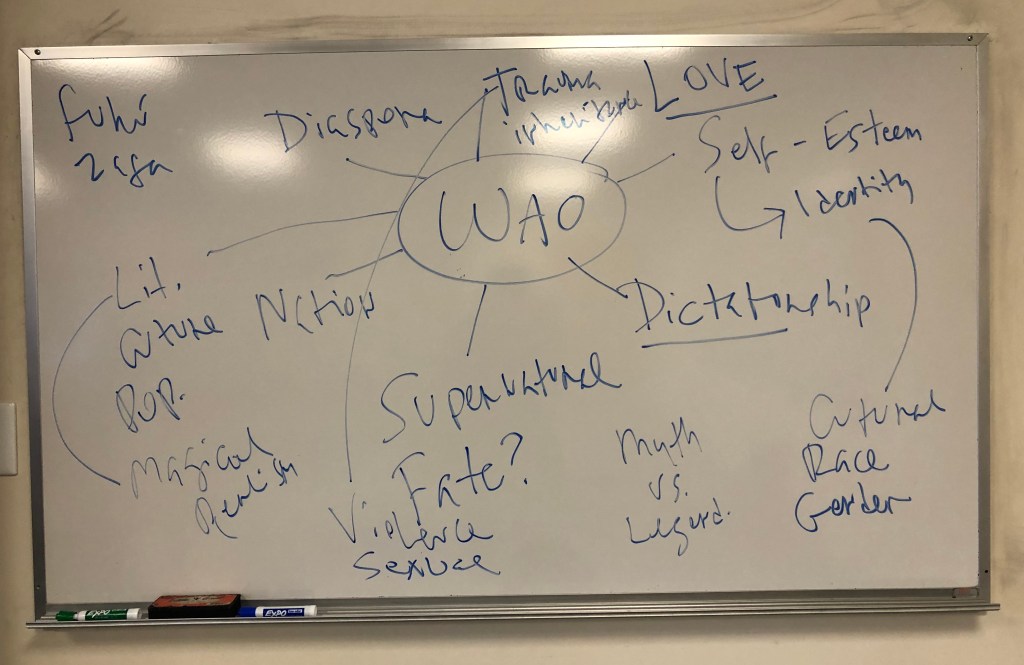
Indeed, much of the conversation about The Brief Wondrous Life of Oscar Wao in our class focused on its representations of the Caribbean, the haunting of the past and personal trauma (fukú), and the possibility of overcoming this history, or what Yunior calls a “zafa”: a counter-spell that could foment a regenerative future for him and the Dominican people and its diaspora. As one of my students pointed out in our two-week discussion, the de León family saga (and through his narration, Yunior’s personal history) acts as a case study for discussions of Dominican and Caribbean experiences of trauma.
Of nineteen students, only two had previously read the novel (one in my course last semester), perhaps a symptom of the status Latinx literature holds within larger conversations of “American” literary and cultural studies and the “American” literary canon––even as Díaz is important within these fields. It was wonderful seeing students’ reactions to reading this novel for the first time, and I was particularly impressed with their tackling of Spanish words, phrases, and slang, and their in-depth appreciation of the extensive footnotes that run throughout the text.
As with most texts, we began our discussion of Oscar Wao visually laying-out the major themes and concerns in the text:
Our introductory class period was mostly spent close reading the epigraphs of the novel, the first from Marvel’s Fantastic Four:
Of what import are brief, nameless lives…to Galactus?”
Fantastic Four
Stan Lee and Jack Kirby
(Vol. I, No. 49, April 1966)
The second is an excerpt from Derek Walcott’s poem, “Schooner Flight”:
Christ have mercy on all sleeping things! From that dog rotting down Wrightson Road to when I was a dog on these streets; if loving these island must be my load, out of corruption my soul takes wings, But they had started to poison my soul with their big house, big car, big-time bohbohl, coolie, nigger, Syrian, and French Creole, so I leave it for them and their carnival— I taking a sea-bath, I gone down the road. I have known these islands from Monos to Nassau, a rusty head sailor with sea-green eyes that they nickname Shabine, the patois for any red nigger, and I, Shabine, saw when these slums of empire was paradise. I’m just a red nigger who love the sea, I had a sound colonial education, I have Dutch, nigger, and English in me, and either I’m nobody, or I’m a nation.
This led us to a discussion of Galactus, his role in the comic book, and how these epigraph might be related to the novel’s title. A cosmic entity who consumes planets in order to sustain life force, Galactus elicits notions of immense force and power. Yet students smartly observed how the novel’s title introduces Oscar as “brief” yet “wondrous,” a word that connotes extra-ordinaryness and otherworldly-ness that perhaps could combat Galactus’ presence. The epigraph from The Fantastic Four also introduces readers to ongoing conversations surrounding the study of popular culture and its relation to notions of “high art.” I pointed students to the careful attention to detail the text lends to this reference, citing not only the comic book’s authors, but also volume number, issue number, and precise date of release (month, day, and year). I asked students to consider this archival minutia––geekery if I’ve ever seen any––in relation to how Walcott’s poem excerpt is referenced, i.e.: without the same citational details of the previous epigraph. In effect, the discrepancies here point readers to understand science fiction, popular culture, and fantasy references to be of more importance in the novel (for more, you can hear Díaz speak about this in the New York Public Library podcast). Although I agree with Díaz that an important secondary or tertiary narrative can be found within these references, the “high” literary details such as the Noble Laureate’s poetry, allusions to Joseph Conrad (“The beauty! The beauty!”), and references to canonical authors are significant for this text and our understanding of Yunior as a burgeoning creative writer. As our discussion of Oscar Wao proceeded, I attempted to place the novel within other literary movements, most importantly postmodern pastiche and the post-9/11 novel.
Notions of uncertainty and cataclysmic terror open the novel, and we spent most of this first class period discussing the importance of fukú americanus as a foundational structure for our reading practices and understanding of the novel’s characters, diasporic history, and potentials for redemption. I asked students to consider the following questions as they continued their reading of the book, keeping fukú as an essential keyword in the plot: How does fukú structure the novel? How does this term introduce us to Antillean history and the potentials for Dominicans in the DR and its diaspora? How does this term teach us to the read everything that follows?
Like the texts we read before this one, our discussion centered on the notion of haunting and the possibility of escaping the horrors of history and trauma-as-lineage. As with We the Animals, our conversation about Oscar Wao addressed the human body, Oscar’s obesity and Belicia’s hypersexual representations. I posited that throughout the novel the female body is presented as a world-destroying presence, a harbinger of (male) apocalypse. For example, the novel describes the Gangster’s desire for Belicia as follows:
I mean, what straing middle-aged brother has not attempted to regenerate himself throughthe alchemy of young pussy. And if what she often said to her daughter was true, Beli had some of the finest pussy around. The sexy isthmus of her waist alone could have launched a thousand yolas, and while the upper-class boys might have had their issues with her, the Gangster was a man of the world, had fucked more prietas than you could count. He didn’t care about that shit. What he wanted was to suck Beli’s enormous breasts, to fuck her pussy until it was mango-juice swamp, to spoil her senseless so that Cuba and his failure there disappeared. (123-124)
In its depiction of Belicia, the novel not only sexually objectifies the Afro-Caribbean female body but also transforms her into the earthy arena on which past historical events such as the Cuban Revolution are explored. The novel considers the hemispheric turbulence caused by Cuban Revolution through its individual effects and its repercussions on the female body, staging sexual intercourse as an extension of dictatorial violence. The Gangster’s future after the Revolution appears “cloudy” (123), and the act of “fuck[ing]” Belicia enables the transformation of her vagina into a stereotypically natural (and tropical) space of danger, stagnation, and death that erases entire political movements. There is much more to say about this passage, but this is just a brief close reading I performed for my students to demonstrate how to “mine the text for meaning” (a phrase I use to talk about analyzing texts).
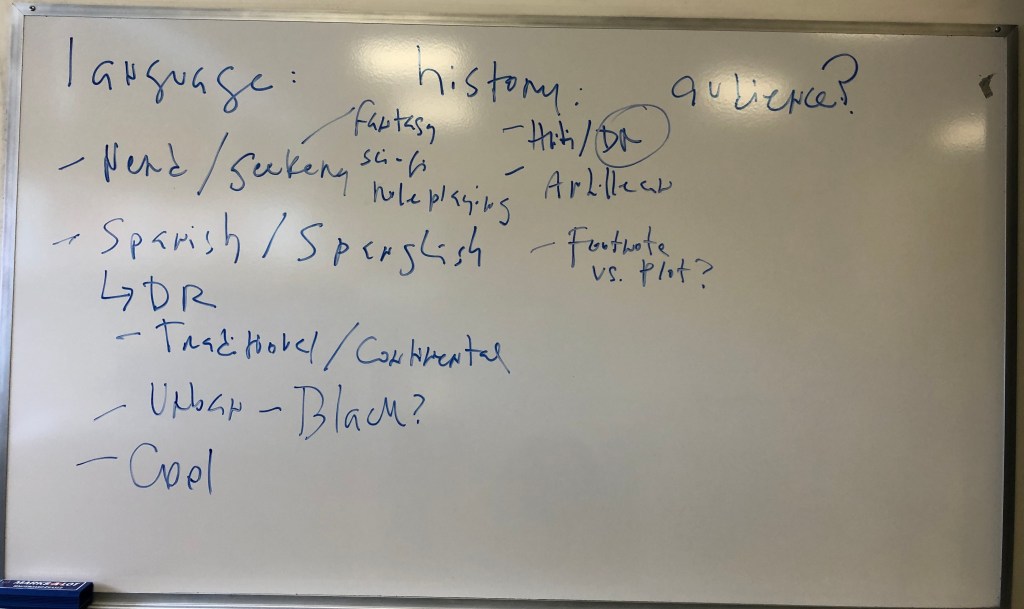
In effect, there is so much to say about this novel. However, I want to conclude this post about teaching Oscar Wao by commenting on our discussion on the novel’s silences and those things left unsaid (something that returned us again to Morrison’s work). Throughout our conversation we also talked about Yunior’s reliability as a narrator, the novel’s multilinguality and code-switching (i.e.: who is this novel written for?), the sexual politics and misogyny that runs throughout the text, and the footnotes as presenting a counter-narrative to the Oscar and Yunior’s story.
There are many silences in The Brief Wondrous Life of Oscar Wao, as can be seen in the various references to “página en blanco” (blank page/s) (78, 90, 119). As with the unknowable words of the mysterious Mongoose that rescues Beli from the cane fields––“_____ _____ _____” (301)—and the words Yunior cannot say to Lola (represented textually identical to the Mongoose’s)—“and I’d finally try to say the words that could have saved us. _____ _____ _____” (327)—the de León family history and the nation’s past is unrecoverable. Abelard, Oscar’s grandfather is rumored to have written a book about the horrors of Trujillo and the cataclysmic past of the Dominican Republic. However, this book, like Oscar’s final letter is never read/found. Throughout our discussion on the novel’s silences, I presented an argument to my students about the possibilities of representing the horrors of Caribbean history and its haunting in the present, and whether the novel can indeed act as a “zafa.” Like Oscar’s excessive physical description and Belicia’s hyper-sexuality, I argued to my students that the novel demonstrates the impossibility of depicting the horrors of history through narrative language. The text reverts to multiple beginnings and endings, excessive descriptions of violence (physical and emotional), multiple references to popular culture and “high art,” and those things left unsaid in order to attempt to depict the haunting of Caribbean violence, without completely being able to do so.
Like Yunior, I am finding it difficult to end my writing about this story. I leave you with this reading by Díaz from the novel. He is a wonderful public speaker and reader of his own work, and I showed my students this clip to demonstrate the power of his narrative voice:
There is so much scholarship on Díaz and Oscar Wao. The following are so of my favorite articles and chapters about this work:
Hanna, Monica. “‘Reassembling the Fragments’: Battling Historiographies, Caribbean Discourse, and Nerd Genres in Junot Díaz’s The Brief Wondrous Life of Oscar Wao.” Callaloo32, no. 2 (2010): 498–520.
Machado Sáez, Elena. “Dictating Diaspora: Gendering Postcolonial Violence in Junot Díaz and Edwidge Danticat.” Market Aesthetics: The Purchase of the Past in Caribbean Diasporic Fiction, University of Virginia Press, 2015, pp. 154–96.
Miller, T.S. “Preternatural Narration and the Lens of Genre Fiction in Junot Díaz’s The Brief Wondrous Life of Oscar Wao.” Science Fiction Studies 38, no. 1 (2011): 92–114.
Saldívar, José David. “Conjectures on ‘Americanity’ and Junot Díaz’s ‘Fuku Americanus’ in The Brief Wondrous Life of Oscar Wao.” The Global South 5, no. 1 (Spring 2011): 120–36.
Vargas, Jennifer Harford. “Dictating a Zafa: The Power of Narrative Form in Junot Díaz’s The Brief Wondrous Life of Oscar Wao.” MELUS: Multi-Ethnic Literature of the U.S. 39, no. 3 (2014): 8–30.
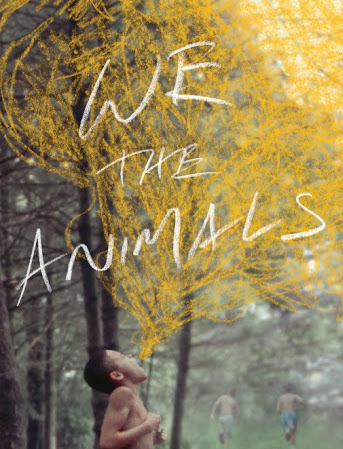
This week, our class concluded its discussion of Justin Torres’s We the Animals. As I’ve said before, my students continually impress me with their approach to the text: they are curious and ballsy in their investigation, never shying away from difficult questions or subjects. Thursday was no different. Students were interested in talking about the narrator’s experience in the basement with his brothers watching what seems to be a home-made pornography; defining this moment as another event in which he seems himself as separated from his “pack.” In effect, the narrator desires to feel kinship, acceptance, and perhaps a form of mutual understanding with his brothers, asking, “Why won’t you look at me, my brothers, why won’t you take my eyes.” There is a wish to return to the first-person plural narrative style that predominates the majority of the book––the “We” that opens the text––but a foreclosure to this possibility. In asking his brothers to look, there is also a wish to be included in their group, to become a threesome again. However, the narrator is rejected, refused, and forced into the first person singular mode, “my.” Importantly, we also discussed the violence in this desire to be seen: what if we take the narrator at his word and actually take his eyes? Is this a desire for the “nothing, just this, just this” that open the novel; a hunger for less burden that becomes oblivion instead? How do we contend with pleasure in “nothing”?
This desire for self-annihilation seems to be connected to the narrator’s sexual experimentation and awakening. After considering his family’s un-rootedness in up-state New York (their lack of history in the region), it seems that the narrator finds a form of self-definition through his sexual encounters. We the Animals begins through a first-person plural description (“we”)––a formal quality that indicates the three brothers’s unity. Yet, as the narrative progresses, we see the separation of the brothers as the narrator not only becomes an individual “I” but also loses a sense of kinship and becomes increasingly isolated. While the narrative has many questions that it leaves unanswered, many white spaces with which to contend, perhaps in “being made” the narrator attempts to not only distinguish himself from his brothers but attempt to define himself outside of his familial relationships.
We spent a great deal of time in class discussing the narrative break that happens the final pages of the novel; a formal quality that mirrors the psychic break in the narrator himself. The ending of the novel, to me, is brutal (another element of the text that is difficult to contend with: how do we discuss violent and difficult material that is rendered in aesthetically beautiful ways?). We see the narrator fully separate from his family, describing not Paps and Ma but “A father,” “A mother,” and himself as “a son.” Defined through their roles (archetypes), the family, heartbreakingly, comes together through the narrators’s suffering: where before Paps was violent and inconsistent, “A father” is now lovingly bathing his son, whispering to him; where before Joel and Manny were fighting, “the boys” are now helping getting the narrator in the car. It is through the narrator’s trauma that a new family structure is formed, and a loving one at that.
Finally, we concluded with a careful examination of the final page of the novel, “Zookeeping.” Students questioned whether the narrator would ever be able to “walk upright” again, mostly convinced that he was stuck in the mental institution. In the narrator’s claim that “I’ve lost my pack,” students read isolation and despair, a desire to return to a “We” that will never take place. In this final moment, students read his dreaming of “standing upright, of uncurled knuckles, of a simpler life” as the narrator defining himself as an animal and the impossible wish to be human (again?). However, I tried to play devils advocate (something I don’t think worked) by asking two things: 1) can we see the various animals that surround him and crown him king as a new form of kinship and acceptance? 2) If there is no love and acceptance and the narrator desires to walk upright again, rejoin his pack, is the final line of the novel something that will, in fact, be fulfilled? “Upright, upright,” I say, I slur, I vow.
If you haven’t seen the movie adaptation, run don’t walk to see it!
In English 3952 this week, we began our discussion of the heartbreaking and gorgeous debut novel by Justin Torres, We the Animals. To be honest, part of why I love teaching this book is how beautiful the prose is and how lovely it is to hear it read out loud––something our class spent time doing today, and will be doing again on Thursday 🙂
As our class always does, we spent some time at the opening of our examination discussing its major thematic concerns. Of course, issues of family, sexuality, poverty and class, hunger, and domestic abuse were introduced. But, as our discussion turned to the page itself, students brought up more complicated distinctions and issues presented by the book. For example, a student asked: “what is the difference between what a child wants and a child needs?” Another presented a beautiful emerging argument about howthe novel attempts to distinguish between the animal and the human as that which is led by instinct, versus the human which is guided by rationality and emotion (I’m incredibly curious to see if these questions and ideas will change on Thursday!).
There is no other way to describe my feeling as a professor after each class of “Monsters, Hauntings, and the Nation” but as proud and joyful. I am continually impressed with the depth of intellectual curiosity and generosity of spirit with which this class engages with each text. Today, was no different. Students had so much to say about important scenes in the text (learning to swim, going to work with Paps on the night watch, being un-found by Ma and Paps) as they explored the pain and trauma that haunts the “We” (soon to be singular “I”). Importantly, we discussed what type of text We the Animals should be labeled under (novel, novella, memoir, interconnected short stories), and students noted how the white space of the text allows (forces) readers to create much of the things that are left unsaid by the narrator. In fact, a few students noted how the narrative style, in many ways, mirrors the thinking patterns of a child; the narrator only allowing readers to see what a child could comprehend. Finally, we discussed how as a bildungsroman we should expect an important change or moment of “education” to take place in the text, and I asked them to consider how this notion should inform how we read the ending.
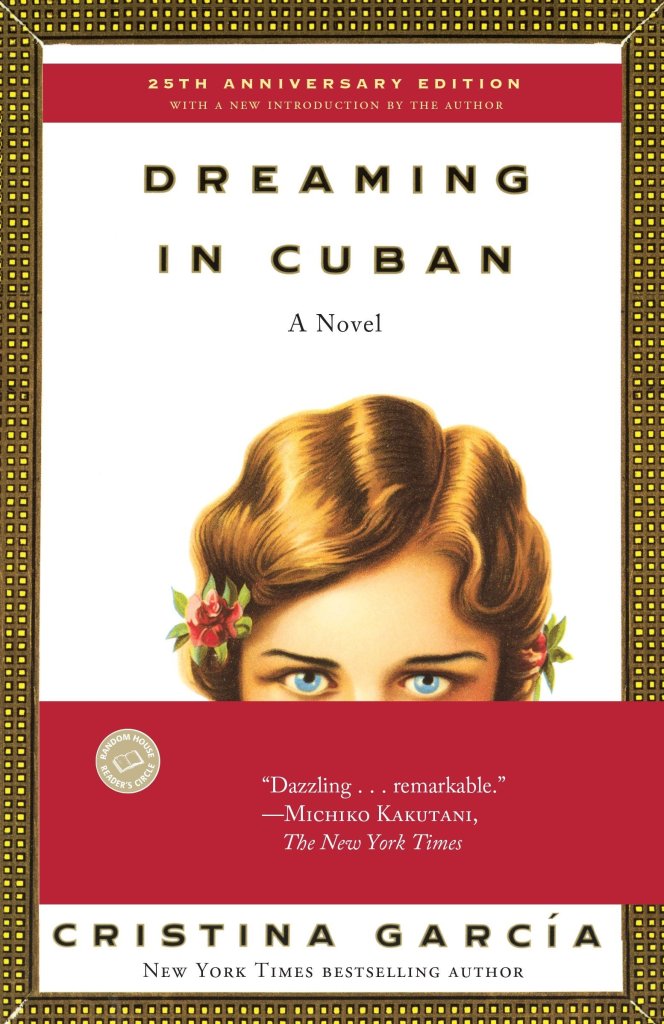
Last week, our class concluded a vibrant discussion on Cristina García’s Dreaming in Cuban (1992). This novel has usually been examined as a story of homecoming, reconciliation, and the possibilities within cultural hybridity. We began our discussion of the novel by laying out its major thematic concerns, such as nationhood, home, identity or lack of, motherhood and family, exile and diaspora, duality and hybridity. While this text does not overtly deal with a “monster” or a “haunting,” I wanted students to see those horrors that lie underneath: for example, how does the history of exile and diaspora lead to horrendous or traumatic events and feelings? In the family saga that is described in Dreaming in Cuban we see the traumatic aftermath of the Cuban Revolution (the primary horror, I argue, in the novel). As one of my students noted, the novel opens with a family tree that perpetually ruptured throughout the text.
Dreaming in Cuban tells the story, primarily, of Celia del Pino, her daughter, Lourdes Puente, and granddaughter, Pilar. While Celia is a deeply loyal to the Cuban revolutionary project, Lourdes has left Cuba to open a series of bakeries in New York, and contrarily to her mother, invested in an American narrative of upward mobility through the accumulation of capital. In Pilar, as most scholars have noted, we see a mixture of both women—as she states, she is neither of Cuban but instead “more than.” Although many have seen an ameliorative project emerge in this narrative—a recuperative trajectory that allows Pilar to be of two places at once—my class astutely observed the trauma that all women in the narrative experience and that, importantly, is never alleviated. For example, Felicia (Celia’s second daughter) dies a horrific death after being a victim of domestic violence and ruinous mental health issues (for both herself and her children); Lourdes is sexually assaulted by a soldier after the Revolution, who carves unintelligible words in her stomach after the rape.
In effect, Cuba is represented in the novel as a source of pain and terror, even as Celia is devoted to the communist mission. In fact, Dreaming in Cuban shows us that there is no future for Cuba or Celia. Her family has died or left her behind, a sign of betrayal (Pilar, indeed lies to her about Ivanito leaving the country) that shows her there is no space for her. Many of my students associated her final moments in the novel (a conclusion that brings us to the novel’s opening in which Celia is “guarding the coast of Cuba” (3) and jumps into the ocean after her husband’s ghost), with Kate Chopin’s The Awakening (1899). As an English teacher, I could not be happier with this intertextual analysis! In Celia’s final moments, they saw a form of resignation:
Celia steps into the ocean and imagines she’s a soldier on a mission—for the moon, or the palms, or El Líder. The water rises quickly around her. It submerges her throat and her nose, her open eyes that do not perceive salt. Her hair floats loosely from her skull and waves above her in the tide. She breathes through her skin, she breathes through her wounds. (243)
I also presented an alternative reading of this final moment by asking: what if we take the text seriously when it says that Celia cannot perceive salt and that she is breathing underwater? What if this is a moment in which without a place for her in home or nation, Celia is becoming something else?



 Monsters, Hauntings, and Horror in Latinx Literature & Film