I see a trend emerging in these past few blogs of mine. Apocalypse, isolation, confusion. How could I have known that I would be teaching stories of the world’s end as the pandemic was forcing us to stay home and obsessively watch the news as things seem to be collapsing around us. First it was No Country for Old Men with its attempt to understand the chaotic force that was approaching, then it was Her Body and Other Parties (especially “Inventory”) with its apocalyptic pandemic spread through human contact––but no one wants to stay apart––and next week is Junot Díaz’s “Monstro.” Although we’ve read Díaz in this class before, I assigned “Monstro” because it deals overtly with monsters and incorporates an under-considered area in Latinx literature, Haiti.
Our class for the semester is next week. I know my students are looking forward to this break. I know I am. I will miss this group of students. I have been so impressed with their commitment to literary analysis and their investment in each other. But transitioning to online teaching during a pandemic has been exhausting. Revisiting Junot Díaz’s “Monstro” in preparation for our class next week has been really interesting. It’s uncanny how many similarities the unknown disease in “Monstro” has to COVID-19: unknown origin, unknown transmission power, the desire for those infected to be close to others who have “La Negrura” as well. Of course, the story carries larger racial and class implications, inflected with the long history of discrimination and violence between the Dominican Republic and Haiti. Yet, as we’ve seen in the past few weeks, black and brown people are getting infected and dying at much higher rates than other populations––an issue that brings up questions of race, class, and expendability.

Like many of the texts we’ve read this semester, “Monstro” is a story I have taught many times and one that I write about for my own scholarship as well. I’ve been sitting with this text for many years now, and as I prepare for this class I really am trying to put my own analysis of the text on the back burner. I’m really interested in those things the students will bring out of the story and hear what they think. So, I’ll present a brief summary of a forthcoming chapter on the story that I’ve been working on:
As with The Brief Wondrous Life of Oscar Wao, we can see how in “Monstro” Díaz continues to demonstrate a deep investment in the otherworldly, excessive, and speculative, as they intersect with histories of violence in the Antilles. In “Monstro,” Díaz turns to the overtly speculative, presenting us with a mysterious infection that begins in Haiti and causes a zombie apocalypse. The story centers on a nameless narrator who returns to the Dominican Republic during summer break from Brown University to visit his mother, who is suffering from cancer, and tells of activities alongside a wealthy acquaintance from Brown, Alex, as the infection slowly takes over in Haiti. Through strange twists and turns, the story also tells how the “viktims” of the infection transform from docile infected bodies to what the story terms “Class 2” monsters, a new formulation of the popular zombie. The narrator details how the infected are quarantined and studied—yet never deciphered—finally demonstrating the danger they present, which makes the “Great Powers” (the story’s reimagination of Western governments) bomb the island. This, however, does not stop the zombie apocalypse.
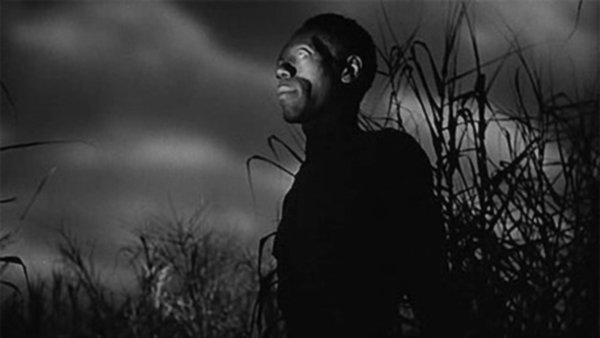
The disease, named in the Dominican Republic, “La Negrura,” for its capacity to re-blacken already black skin, carries apocalyptic consequences for the narrative, as the infected are quickly turned into proto-zombies at first and are fully “zombified” by the end of the narrative. The infected in “Monstro,” I argue, expands Díaz’s well-known concept of fukú americanus, which opens Oscar Wao. My reading of fukú is contingent on the narrative practices in Díaz’s oeuvre and his world-making project. This world-building constructs the Caribbean as a postapocalyptic space created through anathema that reproduces colonial violence on the body of the Afro-Caribbean subject. As a concept, fukú is an all-encompassing force that is both the Curse and a tool used by those byproducts of fukú itself, such as Rafael Trujillo and Christopher Columbus. In “Monstro,” Díaz continues the depiction of the Caribbean as a postapocalyptic space and Afro-Latinxs as science fictional embodiments. “Monstro” presents the Caribbean (and the Americas) as instantiated into modernity by this curse of the New World (fukú), which remains into the present as a haunting presence. I examine how fukú reverberates through the short story’s plot, narrating the Caribbean as a space created through a cataclysmic rift that emits dead bodies. The infected demonstrate affective ties to the land and each other that raise larger questions about memory and the forces that emanate from history through their bodies. Through the infected, Díaz exhumes the histories of colonialism, slavery, embodied labor, and racial expendability: histories that demonstrate an inescapable pattern of violence within the Caribbean. The mass groupings and screams of the infected become a form of racial protest against the histories that created them as dead subjects. Finally, I examine how the “zombie” horde is an effect of the short story itself, in which the particular zombification Díaz narrates points readers to the origins of the zombie in Haiti and the anxiety of racial infection that can turn all island dwellers (and the rest of the Americas) “black” through the disease.
I’m so looking forward to hear what my students think of the viktims, their coral reefed formations, and their desire for proximity. Stay tuned for a summary of my students final reflection papers; I’m sure they will be brilliant, like all their work this semester!
 Monsters, Hauntings, and Horror in Latinx Literature & Film