Tuesday, February 11, 2020
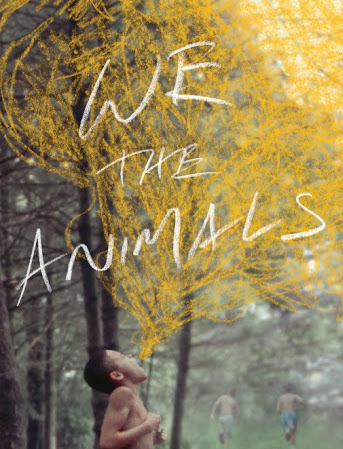
In English 3952 this week, we began our discussion of the heartbreaking and gorgeous debut novel by Justin Torres, We the Animals. To be honest, part of why I love teaching this book is how beautiful the prose is and how lovely it is to hear it read out loud––something our class spent time doing today, and will be doing again on Thursday 🙂
As our class always does, we spent some time at the opening of our examination discussing its major thematic concerns. Of course, issues of family, sexuality, poverty and class, hunger, and domestic abuse were introduced. But, as our discussion turned to the page itself, students brought up more complicated distinctions and issues presented by the book. For example, a student asked: “what is the difference between what a child wants and a child needs?” Another presented a beautiful emerging argument about how the novel attempts to distinguish between the animal and the human as that which is led by instinct, versus the human which is guided by rationality and emotion (I’m incredibly curious to see if these questions and ideas will change on Thursday!).
There is no other way to describe my feeling as a professor after each class of “Monsters, Hauntings, and the Nation” but as proud and joyful. I am continually impressed with the depth of intellectual curiosity and generosity of spirit with which this class engages with each text. Today, was no different. Students had so much to say about important scenes in the text (learning to swim, going to work with Paps on the night watch, being un-found by Ma and Paps) as they explored the pain and trauma that haunts the “We” (soon to be singular “I”). Importantly, we discussed what type of text We the Animals should be labeled under (novel, novella, memoir, interconnected short stories), and students noted how the white space of the text allows (forces) readers to create much of the things that are left unsaid by the narrator. In fact, a few students noted how the narrative style, in many ways, mirrors the thinking patterns of a child; the narrator only allowing readers to see what a child could comprehend. Finally, we discussed how as a bildungsroman we should expect an important change or moment of “education” to take place in the text, and I asked them to consider how this notion should inform how we read the ending.
Stay tuned for Thursday!
 Monsters, Hauntings, and Horror in Latinx Literature & Film